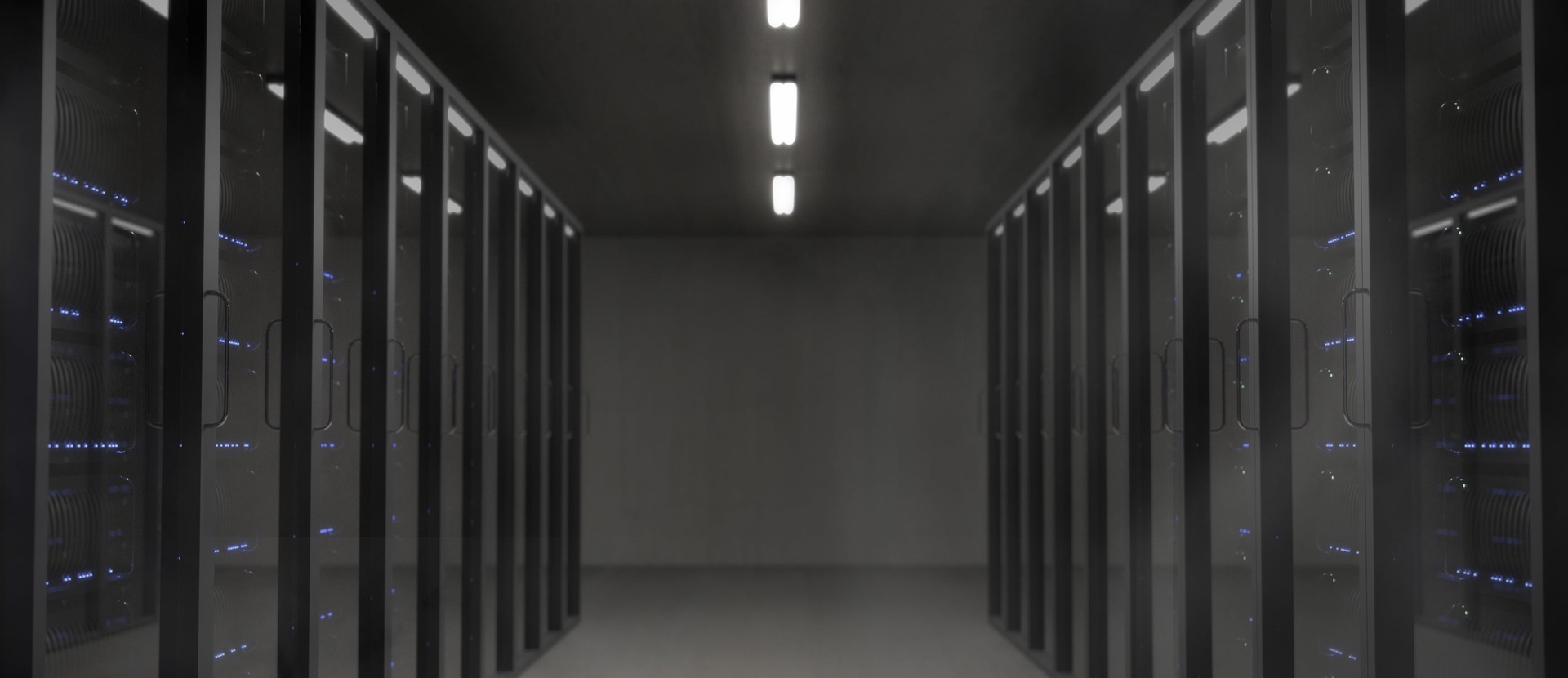


Data centers
Why we are opposing many AI programs and Data Centers

People in communities and neighborhoods across the nation are hurting and scared.
They are rising up in large numbers.
- Hundreds attend local city council meetings to express their concerns.
- Thousands are signing petitions to demand their governments stop these huge buildings that are changing the very culture of their communities.
- Farmers are crying for help as they are forced to surrender their property to be put under the roofs of the data centers.

Many local elected officials are working directly with the builders of these massive facilities, and they are signing non-disclosure agreements (NDA) to hide their plans.
As a result, data center construction suddenly appears with no warning.
- Is this what we now call local representative government? Who do they represent?
- Do local residents have the right to decide how their community is developed and controlled?
- Do homeowners have the right to protect their own property and quality of life?

The installment of 94,000 Flock Cameras designed to watch and record every single thing you do.
AI enhanced Flock cameras can now analyze videos with the power of facial recognition. They are NOT merely license plate readers.
- They record everywhere you go, who you associate with, what you buy, etc.
- Flock cameras are NOT owned by your local municipality; Flock and Google own them and the information from the cameras goes directly into their global data banks.
- Data centers enable both the AI technology and the digital storage needed to maintain these records.
This surveillance will be leveraged against you in tandem with digital bank accounts and digital passports to control every aspect of your life.
Disclaimers
Tom DeWeese and the American Policy Center are not against the use of technology, nor are we “funded by China” or any foreign interest in this matter. However, we are strongly opposed to anything that is used to damage the freedoms our founding fathers fought to secure.
If AI technology helps our military to fight more effectively and save the lives of our soldiers – then we should absolutely use it.
The same can be said for providing better healthcare and curing diseases. We are for it.
And if it helps in research or making certain methods faster – go for it!
But if it’s used to invade our personal privacy, take control of our bank accounts, damage our property values, and build massive data files on everything we do in our lives, THEN IT MUST BE CONTROLLED OR STOPPED!
This land belongs to the people – not to Big Tech!
News and Articles

Special Report: NPS & Beyond
By Lynne M Taylor
Host of “Clear Sightings” podcast; author, speaker, activist October 2026 Recently, I’ve become aware of the vast overreaches being committed by the NPS (National Parks Service). NPS is housed in the U.S. Department of Interior and has partnerships with the following U.S. agencies (per the NPS ...
Finally, Congress Has a Bill to Stop the Flock Cameras. Help Me Build Support to Pass It
Featured image attributed to Tony Webster, CC BY 2.0 <https://creativecommons.org/licenses/by/2.0>, via Wikimedia Commons. https://commons.wikimedia.org/wiki/File:Flock_Safety_ALPR_Camera_(53833285849).jpg
By Tom DeWeese
Flock Cameras – the monster spy tool being used in cities nationwide to record and control your every move! In city after city, America citizens have been tearing them down and saying ...
AI – a New Infrastructure or Threat to Human Society?
By Tom DeWeese
They tell us it’s the future. An infrastructure for a new way of life. A new economy. A new free enterprise. And it’s not artificial – it’s super intelligence! Digital AI systems are being presented as the future of convenience, efficiency, and security. Military development is a ...
A pebble in your shoe demands immediate action!
by Tom DeWeese
You and I are in the middle of the greatest debate – and I believe possibly the greatest threat to freedom that human society has ever faced. Is Artificial Intelligence (AI) a great tool to build a great society – or is it the greatest threat? ...
Tokenization of H₂O: What’s Next, O₂?
by Patti Johnson
The Elites are Claiming the Worlds Water Supply and Plan to Trade it on the Stock Market. Yep, you heard me right. This is not a joke or exaggeration. The facts are out there for all to see. I wrote about the tokenization of nature in my ...
Are AI and its Massive Data Centers the Answer for a Free Society or Its Greatest Threat Ever?
“He that walketh with wise men shall be wise, but a companion of fools shall be destroyed.” Proverbs 13:20 (KJV)
By Tom DeWeese and Eric Meder
President Trump claims that AI Data Centers are “one of the biggest driving forces for the future of jobs.” He goes on to ...


Artificial intelligence and massive data centers are rapidly reshaping the way society operates—but what happens when that technology becomes a tool for surveillance and government control?
In this interview, Tom DeWeese speaks with Eric Meder, co-founder of Privacy Academy, about AI, digital IDs, digital currency, facial recognition, data centers, and the growing threat to individual privacy and liberty. They also discuss the grassroots movement pushing back against expanding surveillance technology and the importance of protecting constitutional rights.
To learn more, visit; https://www.privacyacademy.com
Are massive AI data centers really about technological progress, or are they laying the infrastructure for an unprecedented system of surveillance, digital control, and economic transformation?
In this interview, Tom DeWeese, president of the American Policy Center, sits down with Patrick Wood of Technocracy News to examine the growing technocratic movement, the expansion of AI infrastructure, digital ID, digital currency, asset tokenization, and the implications for individual liberty and private property.
Wood argues that the massive expansion of data centers is connected to a much larger economic transformation—one that threatens local sovereignty, property rights, and individual freedom. They also discuss the grassroots resistance emerging in communities across America and why citizens must become involved in protecting their local governments and constitutional rights.
Patrick Wood: https://www.technocracy.news
In this episode of Catching Fire News, Tom DeWeese sits down with education activist and writer Patti Johnson of Glory to God Studio for a wide-ranging discussion about the transformation of American education and the growing role of AI in the classroom.
In this episode of Clear Sightings, Lynn Taylor takes a critical look at the growth of data centers across America and argues that the debate goes far beyond technology and artificial intelligence. She examines the connection between data centers and student data systems, federal and state legislation, tax incentives, surveillance concerns, and the potential impacts on communities, property owners, energy resources, and the environment.
Taking Action
Freedom Pods
Your most important battles against data centers will be fought locally. Designed to combat the lobbyists, NGOs, and government agencies pushing for changes in our communities, Freedom Pods excel at helping people to organize effectively and apply pressure to local officials. American Policy Center provides a number of free resources on how to assemble a Freedom Pod, as well as the strategies and tactics to make it successful.

Property Rights
If your property rights are being threatened by a data center, the following legislation may be helpful:
Bill #1
https://americanpolicy.org/wp-content/uploads/2024/05/bill-1.pdf
This bill prohibits the use of international law to infringe on property rights. This includes the 1972 Earth Summit, the 1973 Convention on International Trade in Endangered Species, the 1973 UN Environmental Program (UNEP), the 1976 Conference on Human Settlements (Habitat I), and numerous other terrible international laws, including the 1992 UN Commission on Sustainable Development.
Bill #2
https://americanpolicy.org/wp-content/uploads/2024/05/bill-2.pdf
This bill states that private property may be taken only for public use and the taking of private property by any public entity for economic development does not constitute a public use. No public entity may take property for the purpose of economic development.
Bill #3
https://americanpolicy.org/wp-content/uploads/2024/05/bill-3.pdf
This bill requires government authorities to provide just compensation to property owners whenever land use ordinances, regulations, or policies adopted require the property owner to alter their property in any of numerous ways from placing signage, making an expenditure for the protection of riparian areas, or grant easements for public access on the property.
Bill #4
https://americanpolicy.org/wp-content/uploads/2024/05/bill-4.pdf
This bill makes it illegal to make entry onto private property to collect resource data without legal authorization.
Bill #5
https://americanpolicy.org/wp-content/uploads/2024/05/bill-5.pdf
Because technological advances have provided new, unique equipment that may be utilized for surveillance purposes (i.e. drones, etc.), and because these advances often outpace statutory protections, the legislature finds that regardless of application or size, the use of unmanned aerial vehicles, without public debate or clear legal authority, this creates uncertainty for both citizens and agencies. The lack of clear statutory authority for their use may increase liability to state and local jurisdictions. Therefore, clear standards need to be provided.
Get Connected
You are not alone in this fight. In fact, there is a good chance someone has already created a data center resistance group for your community. Check Facebook, X, and other social media platforms to coordinate with the people in your area. Here are some good examples on Facebook: Data Center Resistance, No Data Centers in the Eastern Panhandle, No Data Center Dorr MI
Contact Your Representatives
Contact your representatives and support bills that protect your property rights and your community from data centers. Let your voice be heard!
Find Your Representative | house.gov
U.S. Senate: Contacting U.S. Senators
More Resources
Coming soon. A comprehensive directory of tools and resources (for your convenience) created by individuals and organizations not directly affiliated with APC.